
Omega-3 fatty acids are essential nutrients your body needs but cannot produce on its own. Found primarily in fish oil, flaxseed, chia seeds, and walnuts, these powerful fats support brain, heart, and overall body health. Over the past few decades, hundreds of studies have confirmed the impressive range of Omega-3 benefits — from improving mood to supporting heart health and reducing inflammation.
In this article, we’ll explore 12 science-backed benefits of Omega-3 fatty acids, explain how they work in your body, and offer tips on how to include them in your diet or supplement plan.
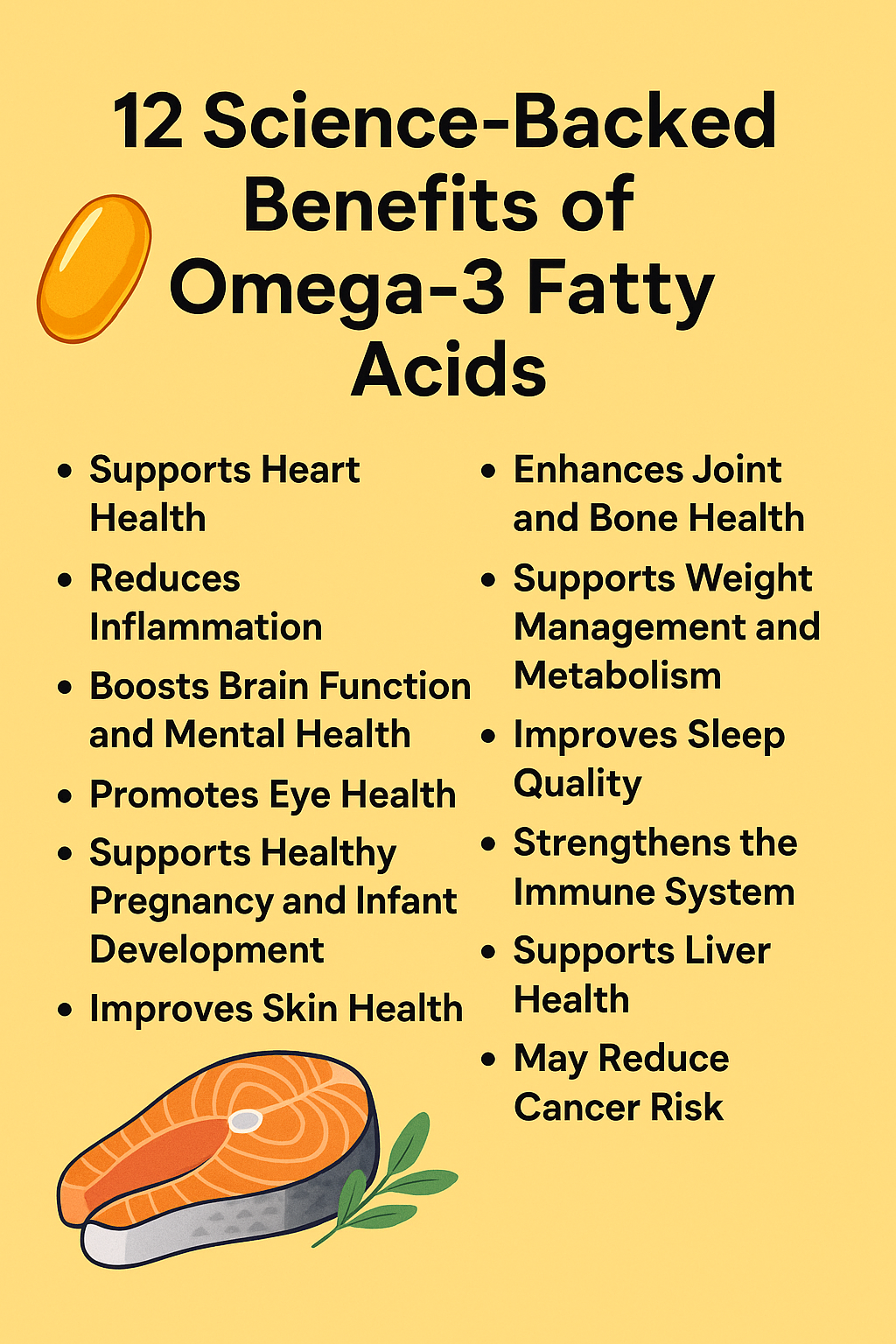
What Are Omega-3 Fatty Acids?
Omega-3 fatty acids are a type of polyunsaturated fat that plays a crucial role in many bodily functions. The three main types are:
- EPA (Eicosapentaenoic Acid) – found mainly in fish and marine oils; known for its anti-inflammatory effects.
- DHA (Docosahexaenoic Acid) – essential for brain and eye health.
- ALA (Alpha-Linolenic Acid) – found in plant sources like flaxseeds and walnuts; converted to EPA and DHA in small amounts.
1. Supports Heart Health
Omega-3 fatty acids are best known for their heart-protective properties. Research consistently shows that they:
- Reduce triglyceride levels
- Lower blood pressure
- Increase HDL (“good”) cholesterol
- Prevent plaque buildup in arteries
- Reduce the risk of heart attack and stroke
Tip: The American Heart Association recommends eating at least two servings of fatty fish (like salmon, sardines, or mackerel) per week.
2. Reduces Inflammation
Chronic inflammation is linked to many modern diseases, including arthritis, heart disease, and diabetes. EPA and DHA in Omega-3s help regulate the body’s inflammatory response by reducing the production of inflammatory molecules such as cytokines and prostaglandins.
Key takeaway: Regular Omega-3 intake can help soothe joint pain, muscle soreness, and inflammation-related conditions.
3. Boosts Brain Function and Mental Health
Your brain is nearly 60% fat, and Omega-3s make up a significant portion of that. DHA is particularly vital for brain development and function.
Studies have shown that Omega-3 supplementation may:
- Improve memory and cognitive performance
- Support mood and reduce symptoms of depression and anxiety
- Lower the risk of age-related cognitive decline and Alzheimer’s disease
Did you know? Countries with higher fish consumption tend to have lower rates of depression, suggesting a strong link between Omega-3 intake and mental health.
4. Promotes Eye Health
The retina in your eyes contains high concentrations of DHA. A deficiency in Omega-3 fatty acids may lead to dry eyes, blurred vision, or even contribute to macular degeneration — a leading cause of blindness.
Adding more Omega-3s can help maintain optimal eye moisture, support retinal structure, and protect long-term visual health.
5. Supports Healthy Pregnancy and Infant Development
During pregnancy and breastfeeding, Omega-3s — especially DHA — play a critical role in the development of a baby’s brain, eyes, and nervous system.
- Improved cognitive function in infants
- Better visual development
- Reduced risk of preterm birth
Tip: Pregnant women should choose purified fish oil supplements to avoid mercury exposure.
6. Improves Skin Health
Healthy skin relies on balanced oil production, hydration, and inflammation control — all influenced by Omega-3 fatty acids.
- Manage eczema and psoriasis symptoms
- Reduce acne-related inflammation
- Maintain smooth, hydrated skin
- Protect against sun damage and aging
For glowing skin, try adding Omega-3-rich foods like salmon, chia seeds, and walnuts to your diet.
7. Enhances Joint and Bone Health
Joint pain and stiffness are common signs of inflammation. Studies show that Omega-3 supplements can:
- Reduce symptoms of rheumatoid arthritis
- Improve grip strength and joint flexibility
- Lower the need for anti-inflammatory medication
Additionally, Omega-3s may help increase calcium absorption, improving bone density and reducing fracture risk.
8. Supports Weight Management and Metabolism
Omega-3s play a role in fat metabolism by enhancing insulin sensitivity and helping your body burn fat more efficiently. Some research suggests that combining Omega-3 intake with exercise may lead to better fat loss results.
Quick fact: Fish oil supplementation has been linked to increased metabolism and reduced appetite in overweight individuals.
9. Improves Sleep Quality
Low levels of Omega-3s — especially DHA — are associated with sleep problems in both children and adults. DHA is involved in the production of melatonin, the hormone that regulates sleep-wake cycles.
- Better sleep duration
- Improved sleep efficiency
- Overall restfulness
10. Strengthens the Immune System
Omega-3 fatty acids enhance immune cell function and help regulate inflammation, making your body better equipped to fight infections. They also help maintain the health of cell membranes, which act as the body’s first line of defense against pathogens.
11. Supports Liver Health
Fatty liver disease is increasingly common due to poor diet and sedentary lifestyle. Omega-3s can help by:
- Reducing liver fat accumulation
- Improving enzyme levels
- Lowering inflammation in the liver
This makes Omega-3 supplements particularly useful for people with non-alcoholic fatty liver disease (NAFLD).
12. May Reduce Cancer Risk
Emerging research suggests that Omega-3 fatty acids may help protect against certain cancers, including colon, breast, and prostate cancer, by reducing inflammation and inhibiting abnormal cell growth.
While more studies are needed, a diet rich in Omega-3s is generally considered beneficial for long-term health and disease prevention.
Best Sources of Omega-3 Fatty Acids
🐟 Animal Sources
- Salmon
- Mackerel
- Sardines
- Tuna
- Cod liver oil
🌿 Plant Sources
- Flaxseeds and flaxseed oil
- Chia seeds
- Walnuts
- Algal oil (vegan DHA source)
How to Choose the Right Omega-3 Supplement
When choosing an Omega-3 supplement, look for:
- High EPA and DHA content (at least 1000 mg combined per serving)
- Purity and safety certification (IFOS or USP tested)
- Triglyceride or re-esterified form for better absorption
- Enteric coating to prevent fishy burps
Conclusion
Omega-3 fatty acids are among the most researched and beneficial nutrients for overall wellness. From protecting your heart and brain to supporting skin, eyes, and mood — their impact is undeniable.
Whether through Omega-3-rich foods or high-quality supplements, making them a consistent part of your lifestyle can yield long-lasting health benefits backed by solid science.
Takeaway: Start today by adding more Omega-3s to your diet — your heart, brain, and body will thank you!
Disclaimer: This article is for informational purposes only and not a substitute for professional medical advice. Always consult your doctor before starting any new supplement regimen.