
Poor sleep is often linked to weight gain, but the relationship is indirect.
Sleep loss does not automatically cause fat gain,
yet it can influence several systems that affect body weight over time.
This article focuses on one outcome of poor sleep.
For a broader explanation of how sleep affects metabolism, hormones, and energy balance as a whole,
see
Sleep and Metabolic Health.
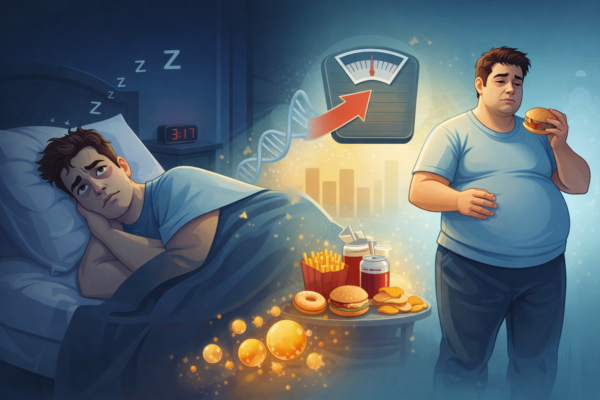
How sleep influences appetite
Short or disrupted sleep can affect hormones involved in hunger and fullness.
This may increase appetite, particularly for quick, high-energy foods,
without a corresponding increase in physical activity.
Energy balance and daily behavior
- Lower energy levels may reduce spontaneous movement
- Fatigue can increase reliance on convenience foods
- Food decisions may become less consistent under sleep pressure
Sleep and energy expenditure
Sleep deprivation may slightly reduce resting energy expenditure
and impair recovery from physical activity,
making long-term weight maintenance more challenging.
What this does not mean
Weight gain is not inevitable with occasional poor sleep.
The effects tend to accumulate gradually and are shaped by overall lifestyle context.
A practical summary
Improving sleep quality supports healthier appetite regulation and energy balance.
While it is not a standalone weight management strategy,
sleep often determines how well other efforts work.