
Rhodiola rosea is often described as an adaptogen for stress, energy, and mental performance. While it has gained renewed attention in recent years, especially in discussions around burnout and fatigue, its role is frequently misunderstood.
This article explains what rhodiola is commonly used for, where its limits are, and who is most likely—or least likely—to benefit. The goal is clarity, not promotion.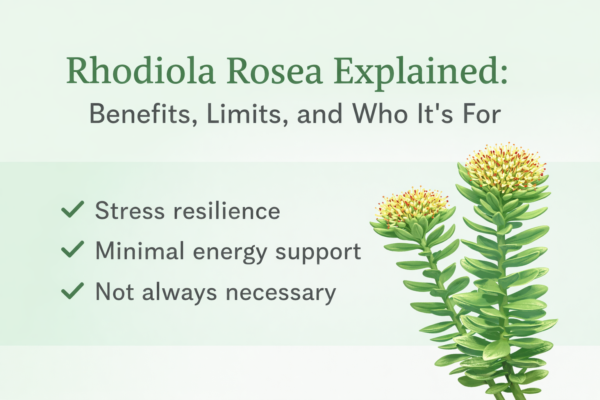
What Rhodiola Rosea Is (and What It Is Not)
Rhodiola rosea is a flowering plant that grows in cold, mountainous regions. Its root has been used traditionally in parts of Europe and Asia, and modern research classifies it as an adaptogen.
Adaptogens are typically described as compounds that help the body respond to stress more efficiently. Importantly, rhodiola is not a stimulant, sedative, or immediate energy booster.
When it has an effect, it tends to feel subtle and regulatory rather than dramatic.
Potential Benefits Often Associated with Rhodiola
Stress Resilience and Mental Load
Rhodiola is most commonly discussed in the context of mental and emotional stress. Some people report feeling less mentally drained during demanding periods, particularly when stress is situational rather than chronic.
Energy Without Stimulation
Unlike caffeine or other stimulants, rhodiola does not typically create a “wired” feeling. Any perceived energy support is usually described as steadier and less prone to crashes.
Focus and Cognitive Endurance
In mentally demanding environments—long workdays, study periods, or sustained concentration—rhodiola is sometimes associated with improved cognitive endurance rather than sharper short-term focus.
Physical Endurance (Context-Dependent)
Some research interest exists around physical endurance and recovery, though these effects are generally modest and vary widely between individuals.
Where Expectations Often Go Wrong
Rhodiola is often grouped with supplements promising dramatic improvements in energy, mood, or productivity. This is where disappointment commonly occurs.
- It does not act immediately
- It does not override poor sleep or chronic overwork
- It does not function as a replacement for recovery
When expectations are too high, even a reasonable supplement can appear ineffective.
Who Rhodiola May Make Sense For
Rhodiola is most often considered by people who experience:
- Periods of elevated mental stress
- Fatigue related to workload rather than illness
- Burnout-like symptoms without clear medical causes
- Sensitivity to stimulants but a need for daytime support
In these situations, rhodiola may serve as a supportive tool rather than a primary solution.
Who May Want to Skip Rhodiola
Rhodiola is not a universal fit. It is often unnecessary—or unhelpful—if:
- Sleep quality is consistently poor
- Fatigue is driven by nutritional deficiencies or illness
- Stress levels are already low and manageable
- You are sensitive to activating herbs
In these cases, addressing underlying factors usually matters more than adding another supplement.
Dosing and Use Considerations
When used, rhodiola is typically taken earlier in the day. Common ranges discussed include:
- 200–400 mg of standardized extract
- Products often standardized to rosavins and salidrosides
- Avoiding late-day use due to possible sleep disruption
Some users prefer cycling rather than continuous use, though responses vary.
Rhodiola vs Doing Nothing
For many healthy individuals, doing nothing at all produces similar outcomes to taking rhodiola—especially when stress levels are temporary or mild.
This is why rhodiola is best viewed as optional, not foundational. If you are unsure whether supplementation is even necessary, this broader discussion may help:
Do You Actually Need Liver Supplements?
Choosing a Product (If You Decide to)
If rhodiola does seem appropriate, product quality matters more than brand popularity. Factors often considered include:
- Clear extract standardization
- Transparent labeling
- Minimal filler ingredients
A side-by-side overview of commonly discussed options can be found here:
Best Rhodiola Supplements of 2025 — Editorial Comparison
Final Takeaway
Rhodiola rosea is neither a miracle supplement nor a waste of time. Its value depends almost entirely on context.
For some, it can provide modest support during stressful periods. For others, it adds little beyond what rest, sleep consistency, and workload adjustments already provide.
Understanding the reason for considering rhodiola is more important than choosing a specific product.