
Camellia sinensis is the plant source of green tea, black tea, and several other traditional teas. In supplement form, green tea extract is typically standardized for polyphenols such as catechins, most notably EGCG.
Although green tea products are often marketed as “detox teas,” Camellia sinensis does not cleanse the liver or remove toxins. Its relevance lies in how its bioactive compounds support oxidative balance and metabolic signaling within broader systems related to liver support and overall metabolic regulation.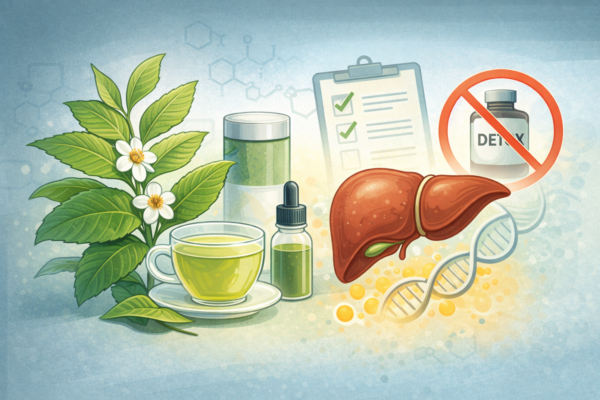
What Green Tea Compounds Actually Do
The primary active compounds in green tea extract are catechins, which function mainly as antioxidants and signaling molecules. Rather than acting directly on the liver, they influence how cells respond to oxidative stress.
- Support antioxidant defense mechanisms
- Influence inflammatory and stress-response pathways
- Interact with energy and fat metabolism signaling
These effects are subtle and cumulative, which is why green tea extract is usually discussed alongside other liver support supplements intended for long-term balance rather than rapid or dramatic outcomes.
How Camellia Sinensis Relates to Liver and Metabolic Health
The liver plays a central role in managing oxidative stress, lipid metabolism, and blood sugar regulation. Green tea extract does not stimulate liver function or accelerate detoxification. Instead, it may help create a metabolic environment that supports normal liver processes.
Research attention has focused on green tea compounds and their ability to:
- Modulate oxidative stress associated with metabolic load
- Support balanced inflammatory signaling
- Interact with pathways linked to insulin sensitivity and fat metabolism
This broader perspective explains why green tea extract often appears in discussions of metabolic health and liver function, rather than as a standalone liver-targeting intervention.
Tea Consumption vs Concentrated Extracts
Traditional green tea provides a moderate and variable amount of catechins, influenced by factors such as brewing time, temperature, and leaf quality. This form is generally well tolerated and integrated into daily routines.
Concentrated green tea extracts deliver higher and more standardized amounts of active compounds, but higher concentration does not guarantee better results. In some cases, excessive intake may increase the risk of digestive discomfort or liver strain.
From a practical standpoint, tea consumption and supplements should be viewed as distinct options with different risk-benefit profiles.
Who Might Consider Green Tea Extract
Green tea extract is commonly explored by individuals who:
- Are interested in gentle, non-stimulant antioxidant support
- Experience lifestyle-related metabolic stress
- Prefer food-derived compounds over synthetic options
It is most appropriate as part of a broader health strategy rather than a targeted approach for correcting liver-related markers.
Limitations and Common Misunderstandings
Green tea extract is often misunderstood due to its association with detox marketing. It does not:
- Flush toxins from the liver
- Compensate for excessive alcohol intake or poor diet
- Produce rapid or guaranteed metabolic changes
High-dose extracts may not be suitable for everyone, and conservative use is generally more appropriate than aggressive supplementation.
A Practical Perspective
Camellia sinensis fits best as a background support compound that contributes to oxidative balance and metabolic resilience over time.
For readers seeking rational, non-extreme approaches to liver and metabolic health, green tea extract works best as a supportive element within a sustainable lifestyle framework, not as a detox solution.