
Alcohol is closely tied to liver health, but the relationship is often oversimplified. Many people focus on “how much” they drink, while ignoring a pattern that can matter just as much in real life: how often.
The liver is highly adaptive. It can handle occasional challenges and return to baseline. But frequent, repeated exposure leaves less room for recovery—even when the total amount per day seems modest. This article explains why drinking pattern matters, how the liver processes alcohol, and what a more practical approach looks like.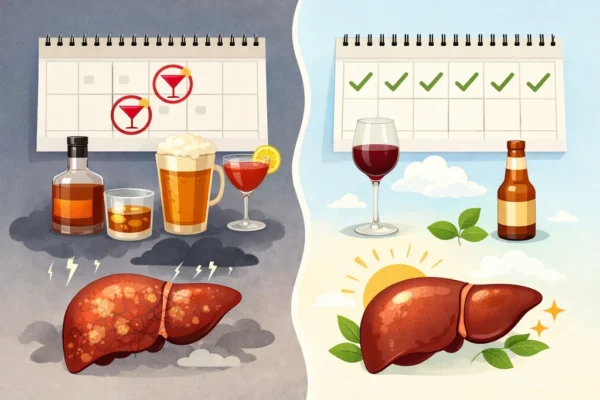
The Liver Processes Alcohol as a Priority
Alcohol is treated differently from many other substances. Because it cannot be stored and has immediate effects, the body prioritizes breaking it down. Most alcohol metabolism happens in the liver.
In simple terms, this means that when alcohol is present, the liver shifts resources toward processing it first. Other metabolic tasks—like fat handling, blood sugar regulation, and recovery processes—may be temporarily deprioritized. The broader “daily workload” role of the liver is explained in Liver Health Explained: How the Liver Actually Works in Daily Life.
Why Frequency Can Be More Disruptive Than a Single Higher Intake
If alcohol exposure is occasional, the liver can often return to a stable baseline. If alcohol exposure is frequent, recovery windows shrink.
This is why two patterns that look similar on paper can feel very different biologically:
- Pattern A: occasional drinking with several alcohol-free days in between
- Pattern B: smaller amounts but repeated on most days
With frequent exposure, the liver is asked to repeatedly switch into “processing mode,” often before it has fully re-stabilized from the previous episode. Over time, this can increase metabolic strain, especially when combined with poor sleep, chronic stress, or a constant calorie surplus.
Alcohol and Fat Processing: The Overlooked Interaction
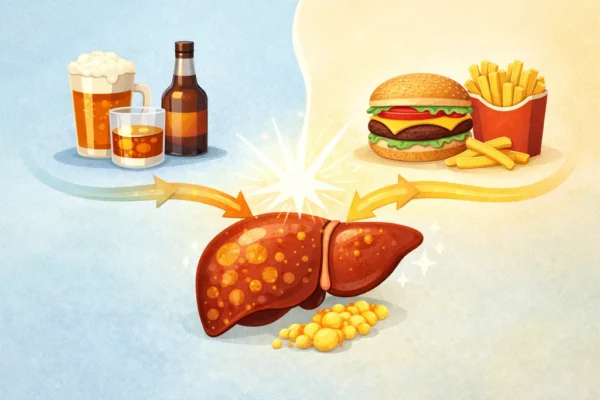
Alcohol metabolism affects how the liver handles fat. When alcohol is being processed, fat oxidation tends to decrease. Meanwhile, fat and triglyceride handling can become less efficient in the short term.
This does not mean a single drink causes liver damage. It means alcohol changes the liver’s priorities. When drinking is frequent, this repeated shift in priorities can make it harder for the liver to maintain metabolic balance—especially in people already dealing with metabolic strain.
Sleep and Alcohol: A Quiet Amplifier
Alcohol is often associated with falling asleep faster, but it tends to reduce sleep quality and fragment deeper stages of sleep. That matters because sleep is one of the main recovery windows for metabolic regulation.
If drinking also reduces sleep quality, the liver may face a double effect: increased processing demand plus reduced recovery time. This relationship fits within a broader recovery framework discussed in Sleep, Stress, and Metabolic Health.
What Liver Enzymes Can and Can’t Tell You
People sometimes look to liver enzymes for clear confirmation that alcohol is “hurting” or “not hurting” the liver. In reality, enzyme levels can fluctuate for many reasons, including recent sleep, exercise, illness, and short-term metabolic load.
Occasional elevations do not automatically mean damage. Patterns over time matter more than isolated results. If you want a deeper explanation of why enzyme values rise and fall, see Why Liver Enzymes Fluctuate Over Time.
A Practical Approach: Create Recovery Windows
For many people, the most realistic way to reduce alcohol-related strain is not perfection—it is creating consistent recovery windows.
- Prioritize alcohol-free days each week
- Avoid stacking drinking on consecutive nights when possible
- Be cautious with late-night drinking, which often disrupts sleep quality
- Pay attention to how alcohol interacts with stress and poor sleep periods
This approach aligns with a non-extreme, practical framework for liver support discussed in Liver Support & Detox Explained: A Practical, Non-Extreme Guide.
A Practical Takeaway
Alcohol and liver health is not only about how much you drink in a single moment. It is also about how often the liver is asked to process alcohol and how much recovery time is available between exposures.
For many people, reducing drinking frequency and protecting sleep quality can lower liver workload more effectively than obsessing over precise limits. Stable patterns and consistent recovery often matter more than dramatic short-term interventions.