
Rhodiola rosea has become one of the most discussed adaptogenic herbs in recent years, often associated with stress resilience, mental clarity, and sustainable energy. As interest grows, so does confusion—many products claim to be the “best,” yet differ significantly in formulation quality, standardization, and intended use.
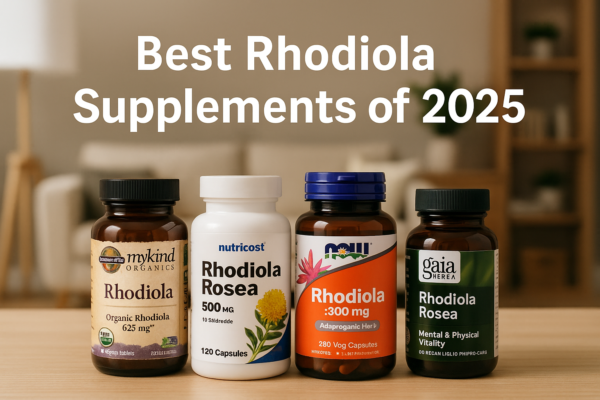
This editorial review looks at several widely used rhodiola supplements in 2025, focusing on ingredient transparency, extract quality, dosing logic, and real-world usability. Rather than encouraging immediate purchase, the goal is to help readers understand what actually matters when evaluating rhodiola—and when supplementation may not be necessary at all.
This page is intended for readers who already understand the basics of rhodiola and want to compare options more thoughtfully, without relying on rankings or marketing claims alone.
What This Review Focuses On
Rhodiola rosea, sometimes called “golden root,” grows in cold, high-altitude regions and has a long history of traditional use. Modern research classifies it as an adaptogen—a category of compounds thought to help the body adapt to physical and mental stress.
The products discussed below are compared based on:
- Standardization: commonly referenced ratios such as 3% rosavins and 1% salidrosides
- Extraction approach: root extract versus whole-herb formulations
- Formulation clarity: labeling transparency, fillers, and testing signals
- Practical use: dosing convenience and tolerance in everyday routines
Potential Benefits Often Associated with Rhodiola
Stress Response & Mental Clarity
Rhodiola is often discussed in relation to stress adaptation. Some users report steadier energy and improved focus during mentally demanding periods, particularly when stress levels are elevated.
Energy & Endurance
Unlike stimulants, rhodiola is generally described as supporting cellular energy processes without a noticeable “boost” effect. Benefits, when present, tend to feel subtle rather than immediate.
Cardiovascular & Mitochondrial Support
Research interest also includes oxygen utilization and mitochondrial function, though these effects are typically long-term and not always subjectively noticeable.
Immune Balance
As with many adaptogens, rhodiola is sometimes associated with immune modulation during periods of prolonged stress or fatigue.
General Advantages and Limitations
| Potential Advantages | Common Limitations |
|---|---|
| Non-stimulant adaptogenic profile | Not ideal for those sensitive to activating herbs |
| May support focus and stress resilience | Effects vary noticeably between individuals |
| Often well tolerated at moderate doses | Quality depends heavily on standardization |
Typical Use & Dosing Considerations
- Common range: 200–400 mg daily of a standardized extract
- Timing: usually earlier in the day to avoid sleep disruption
- Cycling: some users prefer periodic breaks rather than continuous use
Note: Responses can differ significantly. Starting at the lower end allows better assessment of individual tolerance.
Examples of Commonly Discussed Rhodiola Supplements
The following products are frequently mentioned due to formulation style, brand transparency, or availability. Inclusion here does not imply endorsement or suitability for all users.
Pure Encapsulations Rhodiola Rosea
- Minimal-ingredient formulation
- Focus on allergen avoidance
- Often chosen for simplicity
Thorne Rhodiola SF755
- Standardized extract with defined ratios
- Frequently discussed in performance contexts
- Professional-grade positioning
Gaia Herbs Rhodiola Rosea
- Plant-based capsule format
- Emphasis on sourcing transparency
- Popular among herbal-focused users
NOW Foods Rhodiola
- Clearly labeled standardization
- Accessible pricing
- Widely available brand
Nature’s Way Rhodiola
- Straightforward formulation
- Often selected by first-time users
- Mainstream supplement brand
Where People Commonly Look for Rhodiola Supplements
Rhodiola supplements are widely available through several mainstream retail channels. Availability, formulation details, and batch quality can vary, so reviewing labels carefully is often more important than choosing a specific store.
- Amazon: typically offers a wide range of brands and formulations, making it easier to compare standardization details and user feedback.
- iHerb: commonly used for herbal supplements, with region-specific availability and ingredient transparency.
- Official brand websites: sometimes provide the most detailed sourcing and testing information.
- Local health stores: may carry a smaller selection but allow in-person label review.
Rather than relying on store rankings, it is generally more useful to verify extract standardization, dosage per serving, and third-party testing information before making a decision.
How to Interpret These Comparisons
No single rhodiola supplement is “best” for everyone. Differences in stress levels, sleep quality, sensitivity to adaptogens, and overall lifestyle often matter more than brand selection.
In many cases, addressing sleep consistency, workload balance, or caffeine intake has a larger impact than adding another supplement.
Final Perspective
Rhodiola rosea remains one of the more researched adaptogenic herbs, but it is best viewed as a situational tool rather than a default daily requirement.
Understanding why someone is considering rhodiola is often more important than choosing a specific product. For many healthy individuals, doing nothing—or focusing on recovery habits—may be just as effective.