
I’ll be honest: the first time I heard the name milk thistle, I thought it was some kind of fancy latte.
Spoiler: it’s not. It’s a prickly purple flower that your liver will probably thank you for.
But like most wellness supplements, milk thistle sits in that strange space where half the internet swears it’s a miracle, and the other half is like, “meh, show me the science.”
So let’s take the middle road — practical, human, and slightly chatty.
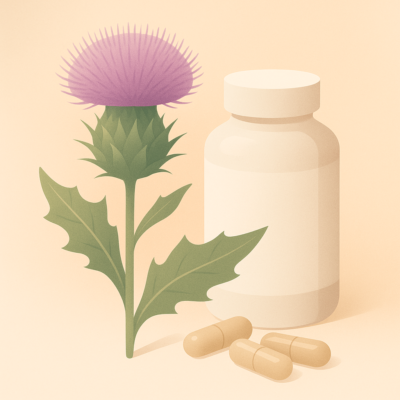
1. What Exactly Is Milk Thistle?
Milk thistle is a plant that has been used for liver health for more than 2,000 years.
(Yes, longer than some countries have existed.)
The active compound is silymarin, a mixture of antioxidants that your liver apparently likes more than I like bubble tea — and that’s saying something.
In simple terms:
- Your liver detoxes everything
- Life keeps throwing “toxic bosses” at it — alcohol, fried chicken, polluted air, stress
- Milk thistle shows up like that reliable friend who says, “Bro, sit down, I’ll help clean this mess”
2. The Benefits (Realistic Ones, Not Magical Ones)
Here’s what research suggests — not the exaggerated marketing stuff:
✔ Supports liver cell repair
Silymarin may help protect liver cells from damage and support regeneration.
Think of it as “liver skincare.”
✔ Helps reduce oxidative stress
Your liver takes punches every day from alcohol, sugar, and life choices.
Milk thistle acts like a mini bodyguard with antioxidant powers.
✔ May support fatty liver health
Some people with non-alcoholic fatty liver see improvements, but it’s not a cure.
It helps — like a supportive teammate, not the entire team.
✔ Could support digestion
Your liver and digestion are basically roommates.
If one is unhappy, the other complains too.
✔ May support blood sugar balance
Not a diabetes treatment! But early research shows potential benefits.
❗ What it won’t do:
- It won’t undo a weekend of heavy drinking
- It won’t “detox” your body overnight
- It won’t make you lose 20 pounds magically
- It won’t turn you into a new person (sadly)
Milk thistle is helpful, not magical.
3. Dosage — How Much Should a Human Take?
Most supplements use:
- 150–300 mg silymarin,
- taken 1–2 times per day.
Common patterns:
✔ For general liver support
150–200 mg daily.
✔ For fatty liver / higher needs
300 mg daily or split into two doses.
✔ With meals
Because your stomach enjoys not being surprised.
4. Safety — Is It Actually Safe?
Short answer: yes, for most people.
Milk thistle is considered one of the gentlest liver supplements.
But let’s be honest — even vitamin C can give someone problems if they take it like it’s candy.
Possible mild side effects:
- Bloating
- Stomach discomfort
- Rare allergic reaction (if you’re allergic to daisies or ragweed)
Who should ask a doctor first:
- Pregnant or breastfeeding
- People on diabetes medication
- People on liver medication
- Anyone who just likes being extra cautious
5. My Personal Observation (The Part That Makes This Feel Human)
I’ve seen a few friends try milk thistle for different reasons:
Friend A: Wanted to “detox” after late-night snacks → ended up drinking more water and feeling healthier mostly because of lifestyle changes, not magic pills.
Friend B: Had mildly elevated liver enzymes → noticed improvements with diet changes and daily walking.
Friend C: Took milk thistle because TikTok said so → forgot to take it after 3 days. No results. Obviously.
My takeaway?
Milk thistle works best when you treat your liver kindly in other ways too.
Sleep, less sugar, less alcohol, more vegetables — the boring stuff that actually works.
But as a supportive supplement, milk thistle earns a solid 8/10 in my book.
6. Should You Try It?
Try it if you want gentle liver support.
Don’t try it if you expect miracles.
It’s like a good assistant:
helpful, reliable, but not going to run your entire life for you.