
Rhodiola: The Adaptogenic Herb That Energizes Body and Mind
Introduction
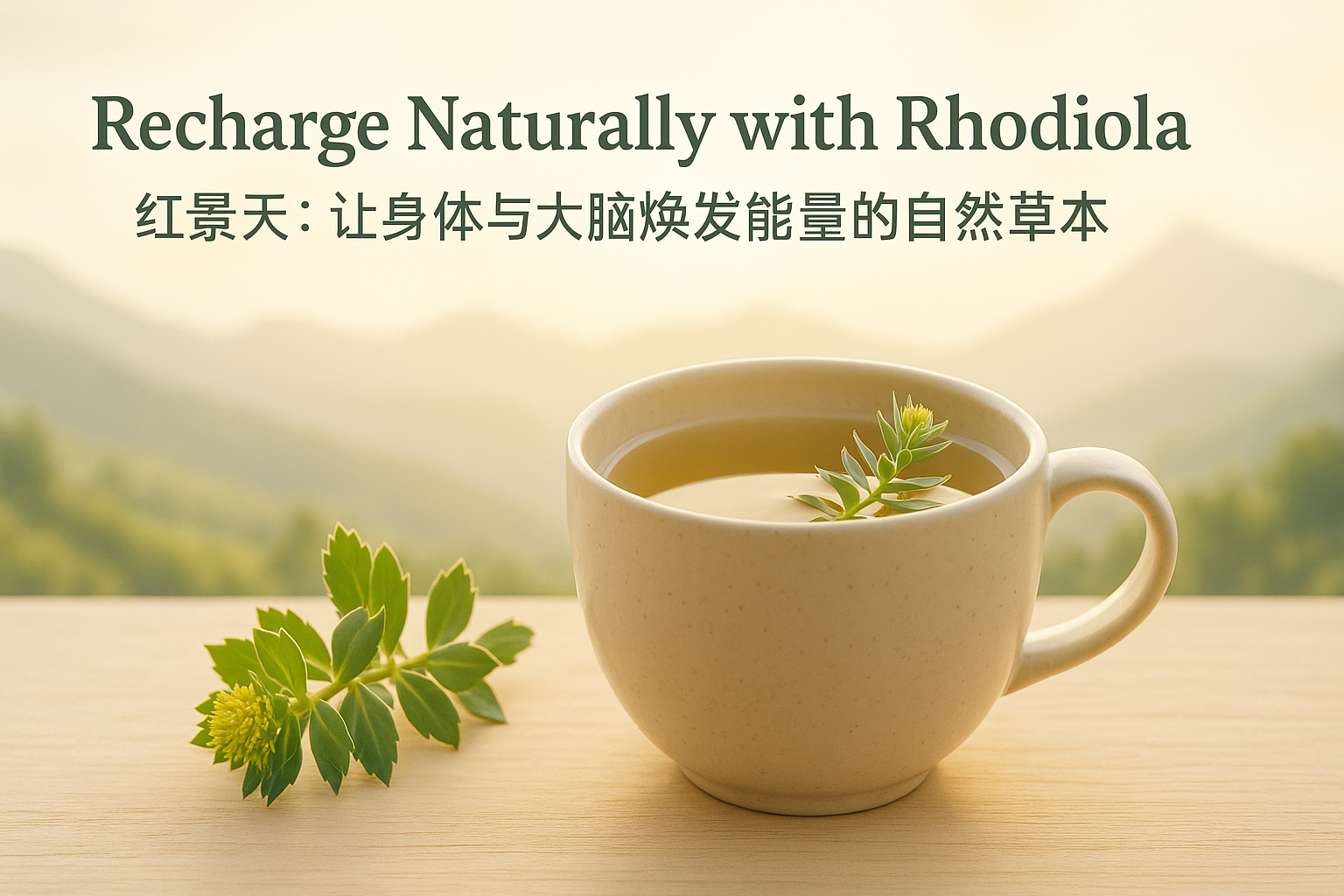
In an age when fatigue and mental stress seem to define daily life, Rhodiola rosea, commonly known as Rhodiola or golden root, has gained increasing attention. This remarkable adaptogenic herb grows in the cold, high-altitude regions of Europe and Asia and has been used in traditional medicine for centuries to enhance endurance, reduce fatigue, and improve resilience.
Today, modern science is uncovering how Rhodiola’s active compounds—rosavin and salidroside—affect the body at a cellular level, particularly in the mitochondria, the energy factories of our cells. The result? Improved energy metabolism, stress resistance, and brain health that supports focus, memory, and mood.
1. What Makes Rhodiola Special
Rhodiola rosea stands out among adaptogens because of its dual action on energy and stress. Adaptogens are natural substances that help the body maintain balance (homeostasis) during stress. Rhodiola achieves this through its two primary bioactive compounds:
- Rosavin – unique to Rhodiola rosea, known for enhancing energy metabolism and reducing fatigue.
- Salidroside – a potent antioxidant that protects nerve and muscle cells from oxidative stress.
Together, these compounds support the hypothalamic-pituitary-adrenal (HPA) axis, regulating stress hormones like cortisol. Unlike stimulants such as caffeine, Rhodiola promotes alertness without causing jitters or energy crashes. This balanced effect makes it a natural ally for both physical endurance and mental clarity.
2. Cellular Energy: The Mitochondrial Connection
At the heart of Rhodiola’s energizing effects lies its impact on mitochondria, the cell’s powerhouses. Mitochondria convert nutrients into adenosine triphosphate (ATP), the molecule that fuels nearly all cellular processes—from muscle contraction to neural signaling.
Research suggests that rosavin and salidroside enhance mitochondrial biogenesis—the process of creating new mitochondria—and improve their efficiency in energy production.
In animal studies, Rhodiola extract has been shown to activate AMP-activated protein kinase (AMPK), a key enzyme that regulates energy metabolism. AMPK activation increases the body’s ability to use oxygen and glucose efficiently, reducing fatigue during exercise or periods of mental exertion.
Moreover, by reducing oxidative damage within mitochondria, Rhodiola helps maintain cellular health and slows down energy decline often associated with aging. In short, healthier mitochondria mean more consistent energy and better resilience to stress.
3. Rhodiola and Brain Health
The brain consumes roughly 20% of the body’s total energy, making it highly sensitive to stress and fatigue. Rhodiola’s mitochondrial support directly benefits cognitive performance, but its effects go even deeper.
Key Benefits for Brain Health:
- Enhanced focus and memory: Studies show that salidroside supports neurotransmitter balance, particularly dopamine and serotonin, improving mental performance under stress.
- Neuroprotection: Both rosavin and salidroside have antioxidant and anti-inflammatory properties that protect neurons from oxidative stress.
- Mood regulation: Rhodiola may alleviate mild depression and anxiety by reducing cortisol levels and stabilizing serotonin activity.
Clinical trials have demonstrated improvements in concentration, reduced burnout symptoms, and increased mental clarity in individuals taking Rhodiola extract for several weeks. These effects are particularly valuable for students, professionals, and anyone facing cognitive fatigue.
4. Rhodiola for Physical Endurance and Recovery
Athletes and fitness enthusiasts often turn to Rhodiola as a natural performance enhancer. Its effects on mitochondria and stress hormones translate into measurable physical benefits:
- Improved oxygen utilization – Rhodiola enhances the body’s resistance to hypoxia (low oxygen conditions), a key factor in endurance.
- Reduced fatigue and muscle damage – Salidroside’s antioxidant activity protects cells during intense exercise.
- Faster recovery – By regulating cortisol and supporting mitochondrial repair, Rhodiola helps shorten recovery time between workouts.
In several studies, participants supplementing with Rhodiola showed increased exercise performance and reduced perceived exertion, highlighting its role as a safe and effective ergogenic aid.
5. How to Use Rhodiola Safely
Rhodiola is available in capsules, tinctures, and teas. For standardized extracts, most studies use doses containing 3% rosavin and 1% salidroside—the ideal balance found in Rhodiola rosea root. Typical dosages range from 200 to 600 mg per day, taken in the morning or early afternoon to support daily energy and focus.
Usage tips:
- Start with a lower dose and gradually increase.
- Avoid taking it late in the evening to prevent overstimulation.
- Pregnant or breastfeeding women should consult a healthcare professional before use.
- Choose products from reputable brands that specify rosavin and salidroside content.
Conclusion
Rhodiola rosea is more than a stress-relief herb—it’s a cellular energy optimizer.
By enhancing mitochondrial function, balancing stress hormones, and protecting the brain from oxidative stress, Rhodiola supports both body and mind in a way few natural compounds can match. Whether you seek sharper focus, better endurance, or a calmer response to life’s challenges, Rhodiola offers a science-backed path to resilience and vitality.
If you’re looking to naturally improve your energy and mental performance, consider incorporating Rhodiola into your wellness routine—your mitochondria (and brain) will thank you.
References
- Panossian, A., & Wikman, G. (2010). Effects of adaptogens on the central nervous system and the molecular mechanisms associated with their stress—protective activity. Pharmaceuticals, 3(1), 188–224.
- Li, H. B., Ge, Y. K., Zheng, X. X., & Zhang, L. (2013). Salidroside stimulated glucose uptake in skeletal muscle cells by activating AMP-activated protein kinase. European Journal of Pharmacology, 588(2–3), 165–169.
- WebMD. (2024). Rhodiola – Uses, Side Effects, and More. Retrieved from https://www.webmd.com